Blogs › The Cost of Conflict: A Debt That Can Never Be Repaid
The Cost of Conflict: A Debt That Can Never Be Repaid
 Written by Jo Foster
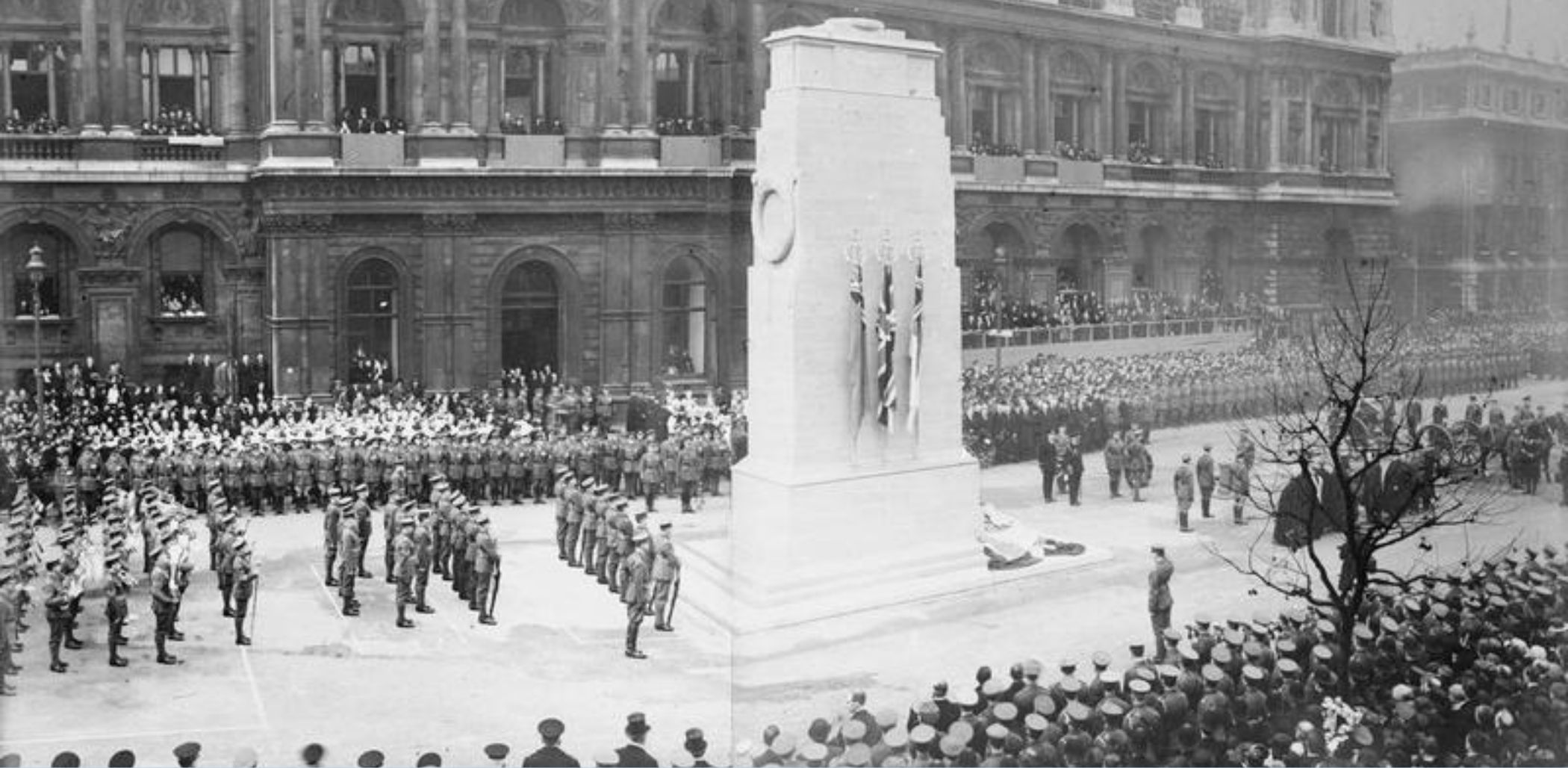
© Public Domain
Every November, as autumn draws towards winter and poppies appear on lapels, we’re reminded of a debt that can never truly be repaid. Remembrance Day is a time to honour the brave men and women who made the ultimate sacrifice during times of conflict.
It’s also an opportunity to remember the millions of lives changed forever by war, including the service personnel who returned home carrying physical and mental scars and the civilians who endured bombing and hardship while keeping life going on the home front.
The human cost of conflict
The statistics associated with the two World Wars are almost impossible to comprehend. WWII alone caused up to 85 million deaths around the world and displaced countless more people. Many displayed extraordinary courage in circumstances most of us can scarcely imagine. Others contributed far from the battlefield, working in factories, hospitals, farms, offices and countless other essential roles.
Husbands and wives endured years apart, children grew up without seeing their father and communities mourned the loss of family members, friends and neighbours together. This human experience should remain at the centre of Remembrance Day.
Wartime tax history: UK under pressure
Alongside its terrible human cost, war places extraordinary financial demands on nations. It has repeatedly forced British governments to find new ways of raising money to defend the country. The history of taxation shows monarchs have found various ways to recruit and fund troops. Medieval rulers used the scutage scheme, which began in England in around 1100 under King Henry I. Landowners paid a sum to the crown, enabling them to stay at home and work the land. The money funded an army of professional trained soldiers, who were better suited to combat.
The hearth tax from 1662 to 1689 required householders to pay a fee for every fire, hearth and stove in their dwelling. Originally a peacetime tax, it provided £250,000 in 1665 to help finance the Second Anglo-Dutch War. The window tax from 1696 to 1851 was based on how many windows a property had. It was introduced in 1696 under King William III specifically to help fund the Nine Years' War against France.
One of the most significant developments in the history of UK income tax arrived in 1799. Prime Minister William Pitt the Younger introduced income tax as an emergency measure in view of impending conflict with France as international relations deteriorated. The Napoleonic wars officially began in 1802. Subsequently, the emergency tax remained and evolved into today’s modern system.
Britain's fortunes transformed in 20th century
The unprecedented scale of the First and Second World Wars became a defining moment in the history of income tax. Armies needed to be equipped, including manufacturing aircraft, ships and vehicles. Hospitals required supplies, while food and essential materials needed to reach both military personnel and civilians. The infrastructure had to be maintained, despite enormous disruption.
Britain’s national debt rocketed from about £706 million in 1914 to more than £7.48 billion by 1919. The Government introduced an Excess Profits Duty to tax businesses whose profits had increased substantially during wartime. Income tax became increasingly important as the Government sought the revenue required to sustain the war effort.
The Second World War placed even greater pressure on public finances. It consumed about a quarter of Britain's total national wealth, emptied its gold and dollar reserves and left the country with an overseas and domestic national debt of roughly £21 billion. Taxation broadened considerably and millions more people became liable for income tax. This transformation led to one of the most important chapters in PAYE history.
Collecting income tax from a rapidly expanding population presented practical difficulties by the mid-20th century. The wartime government introduced Pay As You Earn on 6th April 1944, enabling tax to be deducted from wages at source. It was a major administrative development, demonstrating how dramatically war reshaped everyday British life.
Accounting behind the war effort
The accounting history of the wartime period provides another fascinating perspective on the demands of conflict. Accountants worked throughout government departments, military organisations and industry, helping manage expenditure, allocate scarce resources, monitor production and maintain complex supply networks.
Seen within the wider history of accounting, their wartime responsibilities demonstrate just how important accurate financial information becomes during a national emergency. Some accountants even became involved in intelligence and covert operations, using their analytical and financial skills in circumstances far removed from an ordinary office. Many accountants also served in uniform.
Long-established practices associated with the history of bookkeeping helped organisations record vast numbers of transactions and keep track of money, materials and supplies. At the same time, principles that formed the history of auditing supported financial oversight and accountability when enormous sums of public money were being spent.
These stories remind us that professional titles merged into something much larger when war came. Accountants, teachers, engineers, shopkeepers, miners, factory workers and clerks combined their skills for the national good.
Courage behind barbed wire
Some remarkable stories survive of British accountants who became prisoners of war during WWII. Flight Lieutenant Derek Lister D'Anyers Willis, of 37 Squadron, RAF Bomber Command, was captured in 1941 and spent much of the war in a POW camp. He participated in several escape efforts and continued his professional studies while imprisoned at Stalag Luft III, completing his Institute Final examination in 1944. He eventually returned and worked at London accounting firm Barton Mayhew & Co.
Lance Sergeant John Boyce, of the 89th Heavy Anti-Aircraft Regiment, was another prisoner who repeatedly attempted to escape. During captivity, he continued studying bookkeeping and accountancy, eventually completing several professional examinations. He took part in sabotage activities between October and December 1942, making around 2,000 wheel spokes for German military vehicles, knowing they were too long.
Captain John Furman, of the Royal Artillery, a POW in Italy, organised accountancy training for fellow prisoners and acted as a camp auditor and financial adviser. His wartime courage was later recognised with the Military Cross. Such stories are fascinating pieces of professional history and they tell us a lot about resilience. Studying for an examination represented a belief that there would be a future beyond the war.
Remembering those who never returned
Some lives are represented today by their name being engraved in stone on countless war memorials. Other brave heroes survive through photographs, medals carefully stored by families, letters tied together in boxes, or stories passed quietly through generations. This is why remembrance matters.
At DL Accounts, our profession naturally encourages us to account for money and ensure records balance. However, history teaches us some debts can’t be settled on a ledger. The debt owed to those who sacrificed their lives for future generations is one of them. More than a century has passed since WWI, yet the act of remembrance remains deeply important. When we observe the silence, wear a poppy or stand before a war memorial on Sunday 8th November, we acknowledge the people who gave up their futures so we could have ours. We will join the nation at 11am in pausing to remember those who served and made the ultimate sacrifice.